

 By Victoria Plum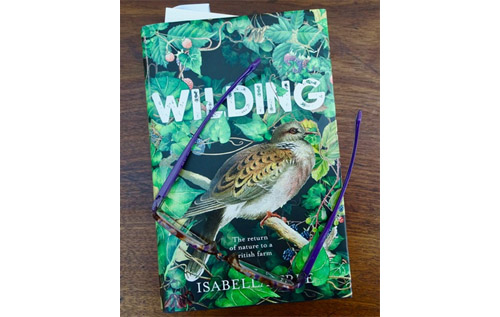
By Victoria Plum
I have been reading a truly fascinating book: Wilding by Isabella Tree. If you have any interest in the whole wheel of biodiversity you really need to read this: 300 pages of beautifully written information and research challenging much of our historic, and contemporary, thinking about all land management.
It is the story of Knepp, 3,500-acre estate in Sussex. Standard farming methods meant that the farms and estate were making no money because of the type of land and the state of the soil.
Drastic times called for drastic measures, and the estate has now been ring-fenced and turned over to nature, with free-ranging deer, ponies, cattle and boar.
A situation has been set up to allow nature to flourish – and flourish is what it is doing with astonishing vigour.
The concept of “wilding” or “rewilding” means you allow nature to do what it will, allowing the natural push and pull of all life forms.
This is very different from the “reserves” with which we are familiar, which are usually set up with the aim of preserving something rare, like large blue butterflies or bitterns, often at the expense of something else.
There is so much to say about the processes and intelligence in this book that I cannot hope to say more here in this tiny space. Please just read the book! It is not a scolding publication, but one full of positivity and hope.
I mentioned my Echinacea-growing efforts last month. I bought compost and so I know the two specks of green I see today are Echinacea seedlings, with more to follow I hope, and not chickweed, which they would have been had the compost been my own.
I have not been forced to delve into the pots to see if there is any sign of the seed, to check whether it has rotted, in a similar way to a school friend who thought her sailfin mollies (tropical fish) so pretty that she kept getting them out of the water to look at their pretty scales. They died.
Photo: Tina Sutton
 Geoff Fisher