

 By Victoria Plum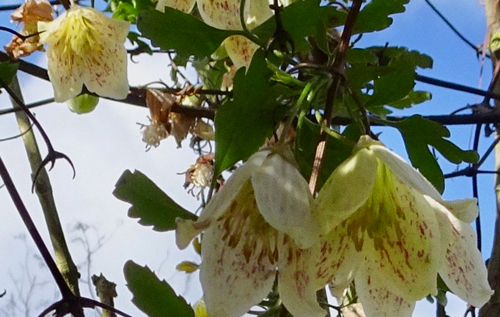
By Victoria Plum
Did you know that one drop of spot-on flea or tick formula or wormer for your dog or cat is sufficient to kill a thousand bees?
We learned many further frightening facts from Hawk Honey (yes, really) of Suffolk Wildlife Trust during his fascinating, far-reaching and informative talk about bees at this week’s meeting of the Reepham & District Gardening Club, but particularly about solitary bees and their parlous position at present.
Agriculture, pesticides (we know that neonicotinoids are banned for farmers, but unbelievably you and I can still buy garden products with similar powerful constituents in any garden centre), nitrates, habitat loss and climate change all cause subtle and comprehensive problems for every creature, but in particular our 250 species of solitary bee.
My book of the year, Wilding by Isabella Tree, is, I believe, required reading for anyone with the remotest interest in the “BioWeb”.
We are now well used to the concept of the internet, so just transpose that to the fantastically complex idea of connectivity and inter-dependence in nature – and that is the BioWeb.
Mrs Tree and Mr Honey both mourn the loss of scrub, and the emphasis on “tidiness” in both land management and garden.
Super-efficient farming machinery and garden gadgets make it easy to tidy, and the tidier everywhere mean fewer places for all our tiny creatures to live.
Scrub and coppice used to be economically important for the generation of twigs and material for domestic basket-making, but the advent and cheap availability of plastic products has meant that scrub has lost its value and was therefore got rid of.
What scrub used to provide was the perfectly protected nursery for many insects and seedlings. The repercussions are obvious.
So why not leave the leaves lying in your garden? I have raked mine off the grass and onto the borders. This is an easy thing to do to start helping nature.
Sharpen your pencil for the quiz (it’s not obligatory though) at the Reepham & District Gardening Club Christmas party on Tuesday 10 December at 7 pm in Reepham Town Hall, Church Street, Reepham.
Above: My Clematis cirrhosa in spring. Now, in November, it is already putting out young leaves and buds, and will flower through the winter and spring, providing pretty flowers and nectar for ages – with no effort from me. – VP
 Geoff Fisher