

 By Victoria Plum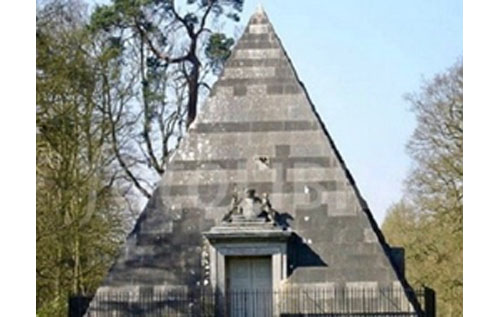
By Victoria Plum
For 30 years I have walked or ridden past the mausoleum (above) at Blickling Park and wondered what the dark and mysterious interior was like, so I was very pleased when walking there, on a Friday morning, to find the building with its heavy iron doors open.
The dark and forbidding mausoleum was inspired by the Grand Tour in Rome, and is a four-sided pyramid, its height and breadth being of equal proportions, built in 1794.
You will notice that the Caen stone blocks used to build it appear smaller as they get higher up the edifice, a perspective device to imply a bigger structure than is actually there. (Gardeners employ the same device by planting small-leaved plants at the end of a “walk” to provide the illusion that actually the plants were large-leaved, which just appeared small because of the huge scale of your landscaping – I do this.)
But inside (below), the shape changes to a beautifully echoing and airy dome with walls rendered, and then painted, over brickwork (locally made bricks, of course), but sadly damp has done damage and rendered the render and plaster very delicate.
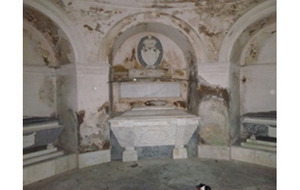
The atmospheric building houses three magnificent ornate marble sarcophagi to John Hobart, his first wife Mary Anne and his second wife Caroline, which stand empty because the remains are actually interred within the brickwork behind each one.
A staunch volunteer is on duty on Friday mornings this summer, from ten to two-ish to allow you access.
Photos: Tina Sutton
 Geoff Fisher