

 By Victoria Plum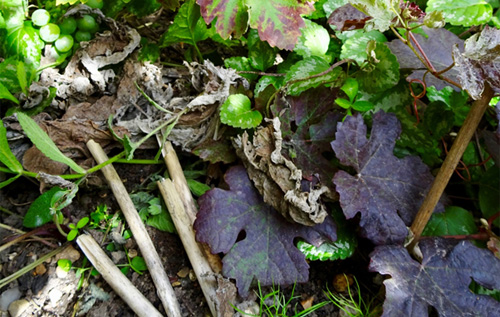
By Victoria Plum
After this fantastic summer when my own flowering garden looked superbly sumptuous – self-sown seedlings germinating everywhere to constantly amaze me with the willingness of everything to grow – now in September the tall plants are flopping and an air of overblown tattiness has set in.
So each year I have this dilemma: to tidy or not to tidy. That is the question, whether to leave the seed heads of outrageous summer to stand statuesque in the frost when it comes, or cut them down to restore a little order to my plot?
I used to gather up the leaves and weeds and bin them. But noticing a keen gardening friend’s borders clad in hydrangea leaves last winter, looking rather attractive with varied colour, texture and shape nestling between the plant stems, it occurred to me to leave the softer matter (not pernicious weeds, of course) to decay on the soil surface among my plants, as nature would have them do, rather than discard it.
This not only protects the soil surface, but also gives homes to the many invertebrates that need to thrive in our gardens, so ensuring our plants thrive.
Safeguarding the nature of our soil is crucial; I noticed two interesting examples locally this week.
New grass was sown, within the past two or three years, on vast, newly fenced fields at Haveringland. The soil here is light and sandy. In my view, this land should not be cultivated; it is not suitable for farmland and has only been used for it because the addition of chemical fertiliser has made it viable.
Horses have cropped the grass low so the lines of drilling are clearly visible, as is the sandy soil. The roots have little protection and each grass plant has difficulty protecting itself from extremes of sun and rain.
Contrast this with the ancient parkland at Heydon. Park in the village and walk through towards the house and straightaway you will see and feel, if you stoop down to touch it, what turf grassland should be like. The depth of plant matter holds moisture, drains excess rain and allows a rich mass of small creatures to live and thrive within, above and below it.
If we look after the soil it will look after us; we ignore the soil at our peril.
Check the Reepham & District Gardening Club website for information on the online meetings. There will be one on Tuesday 15 September, the day we would usually have a meeting.
Photo: Tina Sutton
 Geoff Fisher