

 By Victoria Plum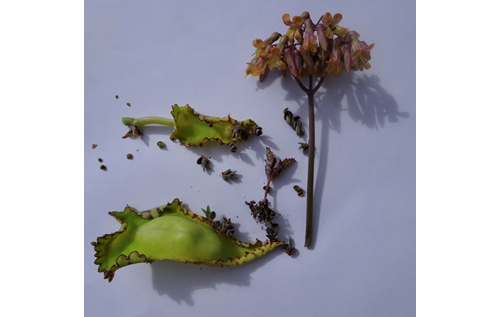
By Victoria Plum
Next year’s list of speakers for the Reepham & District Gardening Club has been finalised, and we look forward to the annual general meeting – a necessary, and painless, event in any well-run club.
At last, we seem to be getting back to pre-pandemic normality. An early start at 7.30 pm on Tuesday 18 April, ensures there will be plenty of time to listen to Simon Partridge update us on what has been happening at How Hill, Ludham (where incidentally I saw my first swallowtail butterfly last year near the river) and then enjoy tea, coffee, cake and biscuits and chat amongst ourselves.
The March talk was a fascinating saga on the development of plant life from the most basic bacteria several million years ago.
Jim Payne of Walnut Tree Garden Nursery went on to describe the countless ways that plant life has evolved to find clever and cunning ways of reproducing and exploiting any avenue of possibility. The variety of plant reproductive activities was quite mind-blowing.
He mentioned Kalanchoe daigremontiana (formally known as Bryophyllum daigremontianum), which produces seed from its flowers although viability is low.
But it hedges its bets because around every leaf grows tiny clones of itself which drop to the ground with their little roots ready to grow.
The shape and angled leaves of each plantlet is such that when rain drops down on them the weight of the droplets ensures the tiny plant stays the right way up, ready to grow.
This strategy is so successful that you might know another name for it: “Mother of Thousands”.
I’ve always been fascinated by this plant since a child. Fifteen years ago, I was holidaying in Samos, Greece, where I found some growing in the garden of our accommodation.
Our landlord kindly gave me a plant, with some leaf babies, and I secured it in a plastic lemonade bottle and smuggled it back to this country in my suitcase.
Every year I let it grow big and let it flower, then when it gets tatty, I discard it and bring on the babies for the next season.
In the Saga magazine (some old person must have left it at my house by mistake) I see that we are advised to mow our grass infrequently, perhaps only every three to four weeks to allow the invertebrates to flourish.
We now have a much better understanding of the connectivity of all life: biodiversity is the buzzword. Literally.
If we have insects and flowers in our lawns, birds and other creatures will flourish.
Pictured above: Mother of Thousands – a flower that has been lovely for about two months, some of the leaflets on, and detached from, the leaves, and one baby plant with its well-established roots. Photo: Tina Sutton
 Geoff Fisher