 By Geoff Fisher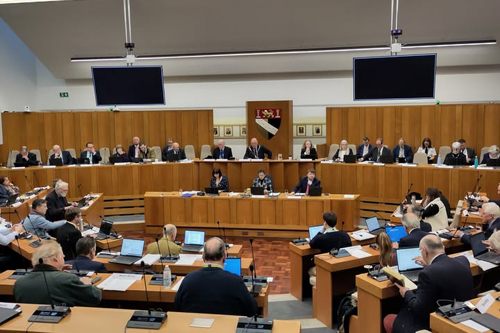
By Cllr Greg Peck
New powers and funding to boost jobs, transport, housing and growth are coming to Norfolk and Suffolk, with Norfolk County Council’s cabinet voting in favour of proceeding with devolution.
Under the government’s devolution priority programme, Norfolk and Suffolk have been offered:
- the transfer of powers and funding from Whitehall to enable decisions on jobs, skills, transport and housing to be taken in Norfolk and Suffolk
- a multi-million pound investment fund for 30 years to spend on local priorities.
The decision means that the new devolved powers and funding would be overseen by a mayor, elected by voters in May 2026, to lead a new combined authority that also comprises councillors from Norfolk and Suffolk.
The mayor and the combined authority will take responsibility for a range of functions and funding, including:
- local transport
- skills and jobs
- housing development
- economic growth and regeneration
- environment and climate change
- from 2027, taking on police and crime commissioner and fire and rescue authority functions.
Positives of devolution for Norfolk and Suffolk
- Greater local control and tailored solutions: Devolution will empower local leaders to make strategic decisions closer to the communities they serve, rather than relying on central government. This enables more responsive, integrated and locally relevant public services.
- Significant long-term investment: The establishment of a Mayoral Combined County Authority (MCCA) will unlock an investment fund of £37.4 million a year for 30 years – more than £1.1 billion in total. This provides long-term financial certainty and autonomy for planning and delivering place-based projects, reducing reliance on short-term, competitive funding pots.
- Economic growth and resilience: Devolution enables the development of tailored economic strategies, boosting productivity, attracting inward investment and supporting local businesses. It also allows for the creation of innovation hubs, infrastructure projects and skills programmes that are specific to local needs.
- Improved transport and infrastructure: The new authority will have powers over local transport planning, bus franchising and the ability to co-ordinate a key route network. This should lead to more consistent and strategic transport policies, better integration and targeted investment where it delivers the greatest impact.
- Skills and employment: Control over adult skills funding will be devolved, allowing the region to tailor skills provision to local economic needs, target key sectors and increase access to lifelong learning. This flexibility should help address skills shortages and support economic growth.
- Housing and regeneration: Devolution brings new powers to accelerate housing delivery and regeneration, including direct partnerships with Homes England and the ability to allocate housing and regeneration grants locally. This should help address local housing needs more effectively.
- Environment and climate change: The authority will have a role in regional energy planning, heat network zoning and local nature recovery strategies. This enables more co-ordinated action on decarbonisation, energy security and environmental protection.
- Health, well-being and public service reform: There will be a statutory duty to improve health and reduce inequalities, with the mayor and MCCA required to factor health outcomes into every decision. This should lead to more joined-up approaches to public health and social care.
- Public safety: The mayor will take on police and crime commissioner and fire and rescue authority functions, aligning public safety governance with other devolved powers for more integrated service delivery.
- Enhanced local voice and influence: Devolution gives the region a seat on the Council of Nations and Regions, amplifying the local voice in national policy-making and ensuring regional priorities are heard and acted upon.
- General power of competence: The strategic authority and mayor will have a general power of competence, allowing them to innovate and act in the public interest, provided actions are not prohibited by law.
You can find out more about devolution at www.norfolk.gov.uk/devolution.
Norfolk’s budget consultation – have your say
As the county council’s annual budget consultation has launched, people are being urged to take a look at the proposals and have their say.
Norfolk County Council is working to set a balanced budget, despite the need to save £41.6 million in 2026–27. This year there are 50 budget-saving proposals, and proposals to increase council tax, which provides a large part of the funding the county council needs. These proposed savings add up to £35.7 million, which would make a big contribution to the overall amount that needs to be saved.
To help deal with cost pressures and invest in vital services, the current budget planning for 2026–27 is based on an assumption to increase council tax. Three options are being considered:
- an increase of 3%
- an increase of up to 5%
- an increase of more than 5%.
Residents can find out more and have their say at www.norfolk.gov.uk/budget. The consultation closes on Monday 15 December 2025.
Give your views on fire and rescue priorities
A public consultation on Norfolk Fire & Rescue Service’s safety and risk plans for the next five years has gone live. Residents, businesses and organisations now have an opportunity to provide feedback on areas the service has identified as priorities for 2026–2031, to mitigate risk and keep our county as safe as possible.
Eight proposals have been put out for the public to comment on, around the areas of:
- road safety
- prevention activity
- building safety
- preparing for and responding to emergencies
- responding to climate change (specifically, extreme weather risks such as flooding and wildfire)
- supporting our people
- fire station improvements
- responding to medical emergencies.
Details of the eight proposals can be found on the Norfolk County Council website, where you can complete an online survey via www.norfolk.gov.uk/crmp.
‘It’s never too late’ – supporting healthy ageing
Looking after your health as you get older is not just a recommendation, it’s a vital investment in your future quality of life. Evidence shows that staying physically active, keeping up with recommended vaccinations and screenings, and maintaining social connections are among the strongest predictors of how well you age. These actions play a direct role in preventing illnesses, reducing the risk of falls and long-term conditions and supporting mental well-being.
Norfolk is home to one of the highest ageing populations in the UK. Now, the county council’s public health department has launched a new campaign to encourage residents aged 50 and over to prioritise their health so they can live healthier, more connected lives as they age.
The campaign is centred on a new healthy ageing programme, called “It’s never too late”, which highlights resources, guidance and opportunities to help residents make positive changes to their health and well-being.
This includes:
- protecting your health: information on vaccination eligibility and booking, NHS screening appointments and NHS health checks
- being active: information on moving more, strength and balance, falls prevention and finding local groups
- feeling connected: finding clubs, groups and one-to-one support, building new connections and practical guidance on transport and digital skills.
To explore the new webpage and find out more, visit: www.norfolk.gov.uk/healthyageing.
Norfolk bucking national trend for recruiting adoptive parents
Norfolk is bucking the national trend for recruiting adopters, with the number of adopters increasing in the county.
Across the country, there are 12% fewer families considering adoption this year compared with the last, whereas in 2024/25, Norfolk County Council’s Adoption Service recruited 43 adoptive households – a 53% increase on the number of adopters who were approved in 2023/24.
Of these 43 households, 37 were couples and six were single adopters. The council has also seen an increase in adopters from global majority backgrounds and from the LGBTQ+ community.
The news comes as the county marks National Adoption Week, with this year’s focus being on busting the misconceptions about who can adopt.
People considering whether adoption is right for them are invited to contact Norfolk Adoption Services on 01603 638343 for a friendly chat and invitation to an information event where they can find out more.
Cllr Greg Peck, Norfolk County Council, Reepham Division
Tel: 07972 230282
Email: greg.peck.cllr@norfolk.gov.uk
Photo: Norfolk County Council